
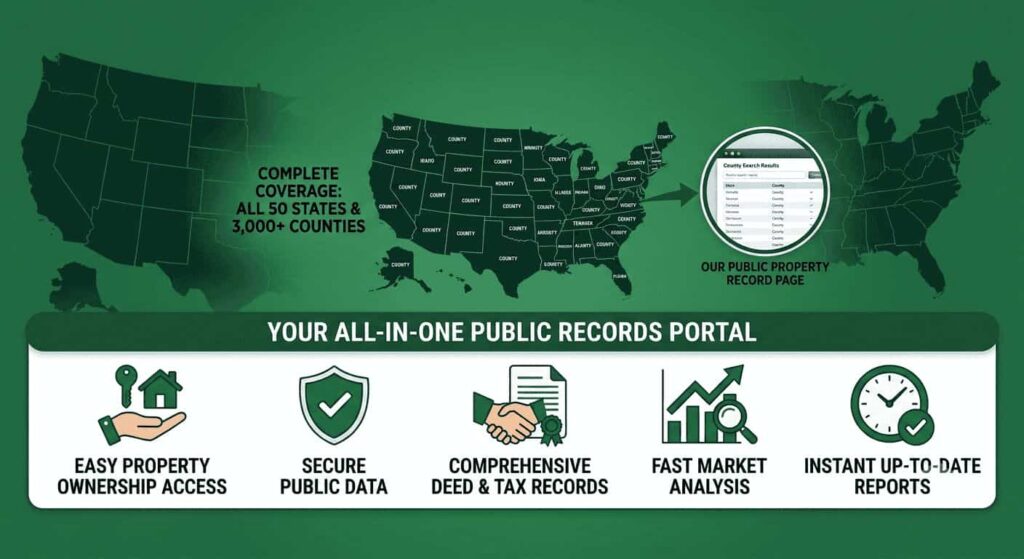
Property Record USA helps people find public real estate information from counties and states across the United States. This website makes it easier to search Property Record USA resources by state, county, property address, owner name, or parcel number to locate official property information. Property records are commonly used to verify ownership, review property history, check tax assessments, and identify parcel details. Available records may include ownership information, deeds, land records, tax assessments, parcel data, legal descriptions, property transfers, and recorded documents. Record availability depends on the county or state maintaining the information. This page begins with property search options before covering the different types of property records available.
Property Records Search
Property Record USA serves homeowners, buyers, investors, attorneys, title companies, and real estate professionals looking for reliable property information. Visitors can search public records using the information they already have, such as an address, owner name, parcel number, county, or state. Property records may include current and previous ownership, deed history, property tax records, assessor information, parcel maps, land ownership details, sales history, and recorded documents. Each county manages its own public records, so available information may vary by location. This website connects visitors with property record resources from across the United States in one place. The next section explains how to search Property Record USA resources using different search methods.
Search Property Records Across the United States
Property Record USA makes it easy to search public real estate information from counties across the United States using a property address. Enter the complete address in the search box and click Search Records to locate matching property record resources. Search results may include ownership details, deeds, land records, parcel information, tax assessments, and other recorded documents, depending on the county maintaining the records.
Search by Property Address
Enter the complete property address, including the house number, street name, city, and ZIP code whenever possible. A complete address improves search accuracy and helps identify the correct property among similar addresses.
Click Search Records
After entering the property address, click the Search Records button to begin the search. The system checks available public property record resources and returns matching records based on the address provided.
Review Available Property Information
After a successful search, available records may include:
- Current property owner
- Previous ownership history
- Property deeds
- Land records
- Parcel Number (APN)
- Property tax assessments
- Legal description
- Property characteristics
- Sales history
- Recorded documents
Search Property Records by State or County
Property records are maintained by local government offices, so available information varies by location. If a property cannot be found, visitors can continue searching by selecting the appropriate state or county to locate the correct public property record source and review available real estate records.
Information Available in Property Records
Property Record USA includes public real estate information collected by county and local government offices throughout the United States. The details available depend on the jurisdiction maintaining the records, though many property records contain ownership information, property characteristics, parcel data, legal descriptions, tax assessments, and sales history. These records help verify real estate information before buying, selling, refinancing, or researching a property.
Owner Information
Owner information identifies the person or business associated with a property. Public records often list the current owner and may include previous owners when ownership has changed over time. These records help verify ownership and confirm whether a property has been transferred through a recorded deed.
Property Details
Property details describe the physical characteristics of a property. This information helps buyers, owners, and real estate professionals compare properties and review important features before making decisions.
Property details may include:
- Property address
- Property type
- Year built
- Building size
- Lot size
- Number of bedrooms and bathrooms
- Construction type
- Garage or parking details
Parcel Information
Each property receives a unique Parcel Number (APN) from the local assessor’s office. This number identifies a specific parcel of land and is commonly used for property tax records, assessor records, GIS mapping, and land ownership records. Parcel information helps distinguish one property from another, even when addresses are similar.
Legal Description
A legal description provides the official identification of a property used in recorded documents and real estate transactions. Unlike a mailing address, this description identifies the exact location of the land using information recorded by the county. It may include subdivision names, lot and block numbers, survey references, or metes and bounds descriptions.
Property Value & Assessment
Property assessment records show the taxable value assigned by the local assessor’s office. Assessment values may change after reassessments, property improvements, or ownership transfers. These records are commonly reviewed before purchasing a property or estimating annual property taxes.
Assessment records may include:
- Assessed property value
- Land value
- Building value
- Property tax assessment
- Assessment history
- Annual property taxes
Sales & Ownership History
Sales and ownership history records show how a property has changed hands over time. Reviewing these records helps verify previous transactions and provides useful historical information about the property. Information may include sale dates, sale prices, recorded deeds, ownership transfers, recording dates, deed references, and other recorded property documents, depending on the county maintaining the records.
Types of Property Records
Property Record USA includes several categories of public real estate records maintained by county and local government offices throughout the United States. Each record contains different information about a property, including ownership, land details, taxes, assessments, mortgages, and recorded documents. The records available depend on the county or state responsible for maintaining public property information.
Property Ownership Records
Property ownership records identify the legal owner of a property and provide a record of ownership changes over time. These records are commonly reviewed before purchasing real estate, confirming ownership, transferring property, or conducting title research. Depending on the jurisdiction, ownership records may include the current owner, previous owners, transfer dates, and recorded ownership documents.
Deed Records
Deed records document the legal transfer of ownership between parties. Every recorded deed becomes part of the property’s public history and helps verify when ownership changed and the type of deed used during the transaction.
| Common Deed Types | Purpose |
|---|---|
| Warranty Deed | Transfers ownership with legal protections for the buyer. |
| Quitclaim Deed | Transfers any ownership interest without ownership guarantees. |
| Grant Deed | Confirms the property has not been transferred to another party during ownership. |
| Trustee’s Deed | Records ownership transferred through a trustee or foreclosure process. |
| Special Warranty Deed | Provides limited ownership protection for a specific ownership period. |
Land Records
Land records focus on the parcel of land rather than the buildings located on it. These records help identify property boundaries, lot dimensions, subdivision information, easements, and legal land descriptions. Land records are frequently reviewed during property purchases, land development, boundary verification, and surveying projects.
Property Tax Records
Property tax records show the taxes assessed by the local taxing authority for each property. Homeowners, buyers, and investors often review these records to estimate annual tax obligations and compare historical tax changes before making real estate decisions.
Property tax records may include:
- Annual property tax amount
- Tax assessment history
- Tax payment status
- Tax district information
- Delinquent taxes (where available)
Assessment Records
Assessment records show the value assigned to a property by the county assessor for taxation purposes. The assessed value may differ from market value and can change after reassessments, renovations, new construction, or ownership transfers. Assessment records often help property owners review taxable values and compare historical assessments.
Mortgage & Lien Records
Mortgage and lien records show financial claims recorded against a property. These records help identify loans secured by real estate or legal claims that may affect ownership or future property transfers. Buyers, lenders, attorneys, and title companies often review these records before completing a transaction.
Plat & Survey Records
Plat and survey records provide detailed information about a property’s boundaries and layout. These records help confirm the legal dimensions of a parcel and identify features recorded by the county surveyor or recorder.
| Record Type | Information Included |
|---|---|
| Plat Map | Lot layout, subdivision boundaries, streets, and easements |
| Survey Record | Property boundaries, measurements, and survey references |
| Boundary Information | Lot dimensions, corner markers, and legal boundary lines |
| Easement Record | Utility, drainage, roadway, or access easements |
| Legal Survey | Official survey prepared by a licensed surveyor |
Government Offices That Manage Property Records
Property Record USA collects information from local government offices responsible for maintaining public real estate records across the United States. Each office manages a different part of a property’s public history, including ownership transfers, tax assessments, property values, and recorded legal documents. Since every county follows its own record management system, the office responsible for a particular record may vary by location. Knowing which office maintains a specific record helps visitors locate property information more efficiently and reduces the time spent searching multiple sources.
County Recorder
The County Recorder is responsible for recording and preserving official documents related to real estate transactions. Whenever ownership changes or legal documents affecting a property are filed, they are typically recorded through this office. These records create a permanent public history of the property and are commonly reviewed during property purchases, refinancing, title research, and legal transactions. Many counties provide online record search systems that allow the public to review recorded documents.
Common records maintained by the County Recorder include:
- Property deeds
- Mortgage documents
- Lien records
- Easement agreements
- Property transfer records
Property Appraiser
The Property Appraiser determines the value of real estate for local taxation purposes and maintains detailed property information. Property records maintained by this office often include building characteristics, land details, parcel information, and assessed values used by local taxing authorities. Homeowners, buyers, lenders, and investors frequently review appraisal records to compare property values and verify assessment information before making real estate decisions.
Tax Assessor
The Tax Assessor calculates property taxes using the assessed value assigned to each property. This office keeps records related to taxable values, assessment history, exemptions, and annual property taxes. Property owners often review these records before paying taxes, appealing an assessment, or estimating future tax obligations. Tax records may change after reassessments, property improvements, or approved exemptions.
| Tax Assessor Records | Description |
|---|---|
| Assessed Value | Value used to calculate property taxes |
| Property Tax Amount | Annual taxes charged on the property |
| Assessment History | Previous taxable values |
| Tax Exemptions | Approved exemptions, where available |
| Tax Payment Status | Current payment information, if publicly available |
Register of Deeds
The Register of Deeds records and preserves legal documents that affect real estate ownership. In many states, this office performs responsibilities similar to a County Recorder, although the office name differs. Property buyers, attorneys, lenders, title companies, and researchers regularly review these records to verify ownership history and confirm recorded property documents before completing a transaction. The documents maintained by this office become part of the property’s permanent public record.
Frequently Asked Questions
Property Record USA answers common questions about public property records, ownership information, deed records, land records, tax assessments, and property searches across the United States. The answers below explain how property records are maintained, what information they contain, and how visitors can search them through county and local government offices.
What is a property record?
A property record is an official public record that contains information about a specific parcel of real estate. It documents the history of a property from the time it is recorded, including ownership changes, deed transfers, parcel details, tax assessments, and legal descriptions. Many property records contain information about the land, buildings, assessed values, and recorded documents related to the property. These records are maintained by local government offices and are commonly used during property purchases, refinancing, title research, and ownership verification. The exact information available depends on the county or state responsible for maintaining the records.
Are property records public?
Most property records are public records and can be viewed through county or local government offices. Public record laws allow property information to be available for real estate transactions, legal research, lending, taxation, and ownership verification. Some personal information or confidential documents may be restricted under state or local regulations to protect privacy. Online record availability differs between counties, with some jurisdictions providing detailed searchable databases and others offering limited information. The amount of information returned depends on the policies followed by the local government office.
How do I search property records?
Property records can usually be searched using a property address, owner name, parcel number (APN), state, or county, depending on the search options offered by the local jurisdiction. Entering accurate search information helps identify the correct property and reduces the chance of matching similar records. Many counties provide online search systems, while others require requests through the appropriate government office. Property Record USA helps visitors locate property record resources across the United States from one convenient location. Search features and available records vary based on the county maintaining the public records.
Can I search by address?
Yes. Searching by a complete property address is one of the easiest ways to locate public property records. Entering the house number, street name, city, and ZIP code helps identify the correct property and improves search accuracy. Address searches may return ownership information, deed records, parcel details, tax assessments, legal descriptions, sales history, and other recorded documents. The information available depends on the county maintaining the property records. Some counties may provide more detailed records than others.
Can I search by owner name?
Yes. Many counties allow visitors to search property records using the property owner’s first and last name. This search option is helpful when the property address is unavailable or when researching multiple properties owned by the same person or business. Search results may include ownership information, property addresses, parcel numbers, deed history, and related public records maintained by the county. Since every jurisdiction manages records independently, search options and available information may vary. Using the correct spelling of the owner’s name often improves search results.
What information is included?
The information included in a property record depends on the county or state responsible for maintaining the records. Many property records contain ownership information, property address, parcel number, legal description, deed history, land records, assessed value, tax assessments, sales history, and recorded documents. Some jurisdictions include detailed property characteristics such as building size, lot dimensions, year built, and property type. Other counties may publish only basic ownership and assessment information. Record availability differs across the United States based on local public record policies.
Are property records free?
Many counties provide free online property record searches that allow visitors to review basic property information. Some local government offices charge fees for certified copies, historical records, recorded document images, or official property reports requested by the public. The cost, availability, and online search options depend on the county or state responsible for maintaining the records. Basic property searches are often available without charge, while certified documents usually require payment. Visitors should review the policies of the appropriate local office before requesting official copies.
Who maintains property records?
Property records are maintained by several local government offices, each responsible for different parts of a property’s public history. Depending on the county or state, records may be managed by the County Recorder, Register of Deeds, Property Appraiser, Tax Assessor, or another office responsible for recording public real estate information. These offices maintain ownership records, deed documents, tax assessments, parcel information, and other recorded property documents throughout the life of the property. Their responsibilities may vary slightly between jurisdictions, although their primary purpose remains the same. Together, they help preserve accurate public records for property owners, buyers, lenders, attorneys, and researchers.